As Malawi draws attention for its rich mineral deposits—creating new opportunities for economic growth and rural livelihoods—an environmental and public health crisis is unfolding in the artisanal and small-scale gold mining sector.
Across mining communities, informal miners rely on mercury and, in some cases, cyanide to separate gold from ore.
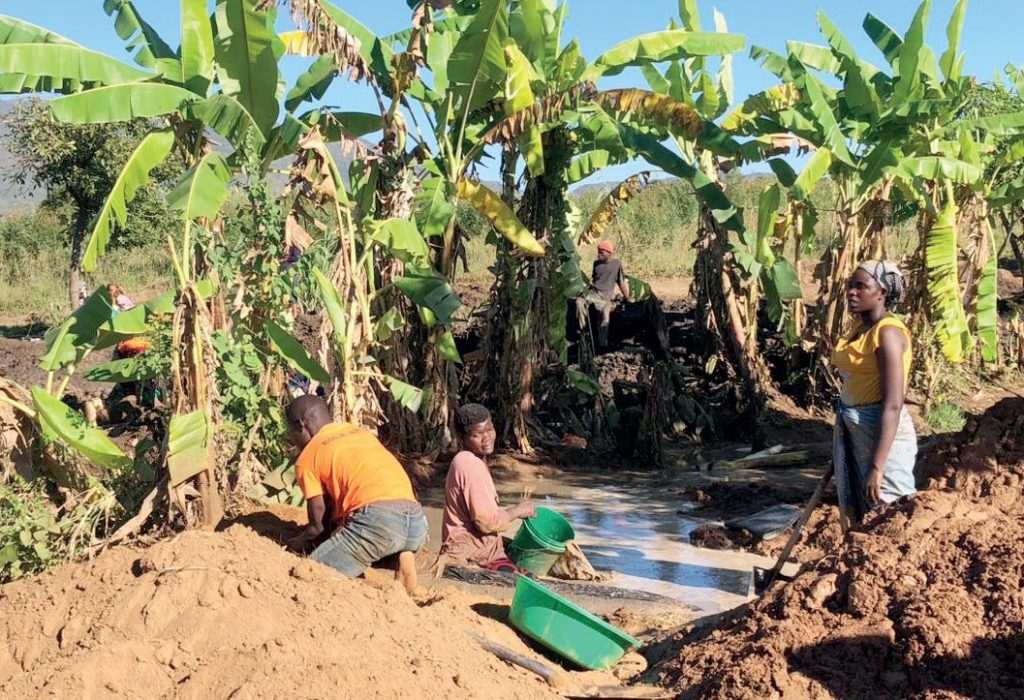
The chemicals are often handled without protective gear or technical knowledge, exposing miners, their families and nearby communities to serious health and environmental risks.
McNeil Phiri is among the artisanal miners using mercury to extract gold from crushed rock in Chitanthamapiri, Kasungu District.
In an interview, Phiri said he and fellow miners handle mercury with bare hands and without face masks.
“I know it’s dangerous because when we go to sell the gold, the buyers heat it again and they wear masks to avoid the smoke. What we are looking for is money and I think the little exposure we get is not dangerous,” he said.
Artisanal Miners Association Secretary General Peter Robert confirmed that mercury and cyanide remain widely used. He attributed this to limited awareness of the health and environmental hazards.
The association represents about 1 900 artisanal miners and has engaged the Malawi Environmental Protection Authority (Mepa) to educate members on safer mining practices.
“Much as we want to make money, we realise miners are being exposed to hazardous chemicals,” Robert said. “Mercury and cyanide are very dangerous and when they contaminate water sources, they damage the ecosystem. We acknowledge our shortcomings in civic education and hope to coordinate with stakeholders to strengthen awareness.”
Natural Resources Justice Network chairperson Kosamu Munthali said miners must adopt safer technologies that can recover gold without endangering health or the environment.
He warned that mercury used in extraction eventually finds its way into rivers and streams, exposing communities that depend on them for domestic use.
Women are particularly vulnerable, he noted, because they are more likely to use rivers for washing, collecting water and other household chores.
Munthali also blamed weak enforcement of mining and environmental laws and called on authorities to tighten oversight.
A joint taskforce established to curb illegal mining — comprising officials from the Ministry of Defence, Ministry of Mining, Malawi Mining Investment Company, Malawi Defence Force, Malawi Police Service and National Intelligence Service under Major General Lackson Phiri — has also seized mercury and cyanide during operations.
Phiri recently told the Parliamentary Committee on Natural Resources and Climate Change that through Operation Msamala Mgodi, the agencies confiscated several harmful chemicals, including mercury and cyanide, used in illegal mining in Kasungu, Dowa and Karonga districts.
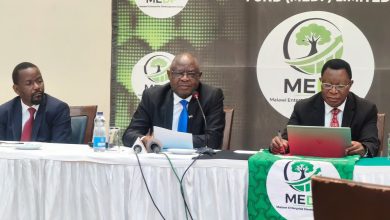
Minister of Mining Thoko Tembo said he is aware of the continued use of harmful chemicals.
He said his ministry has instructed the Export Development Fund not to buy gold processed with mercury and is conducting inspections and sensitisation.
“While cyanide can achieve better gold recovery than mercury, it is also a hazardous chemical that must be handled responsibly with appropriate personal protective equipment, proper storage and sound waste management practices,” Tembo said.
“To address these challenges, the ministry is promoting the formalisation of artisanal and small-scale miners, enabling them to receive training on safer mining practices and comply with mining, occupational safety and environmental standards.”
He added that the ministry, through its mineral processing laboratory, is researching safer and more efficient gold processing methods, including technologies that reduce or eliminate hazardous chemicals Said to have convened meeting: Ndau [Picture courtesy of High Commission website]
while maximising recovery.
“We are working with [Mepa] and other relevant institutions to strengthen environmental monitoring and address contamination where necessary,” Tembo said.
Mercury, a potent neurotoxin, remains the dominant chemical used to extract gold in Malawi’s expanding informal mining sector, much of which operates without regulation.
Health experts warn exposure can cause irreversible brain damage, developmental disorders, tremors and loss of vision, hearing, and coordination.
The risks are higher for pregnant and breastfeeding women. Mercury can cross the placenta, exposing unborn babies to developmental delays and birth defects. Infants may also absorb the toxin through contaminated breast milk.
Experts say gold can be extracted without mercury. Safer alternatives such as gravity separation using equipment like shaking tables allow miners to recover gold while significantly reducing risks to human health and the environment.